

Why Does Specialty Coffee Cost More Money?
Last Updated: October 26, 2026
Quick Summary
Specialty coffee costs more money because every step from seed to cup carries a premium: selective harvesting, careful processing, small-lot roasting, and a supply chain that pays farmers above commodity rates. Specialty coffee must score 80 points or higher on the Specialty Coffee Association's 100-point scale, and that quality grade sets a higher price floor than commodity coffee traded as a uniform product.
- Specialty coffee scores 80+ on a 100-point scale judged by certified Q Graders.
- Commodity coffee typically scores below 80 and is traded as a uniform product.
- Green coffee is the biggest single cost in a specialty bag's price.
- Single-origin lots cost more because smaller lots leave no room to swap in cheaper beans.
- A roasted on date is the single best freshness signal on a bag.
Table of Contents
- Why Specialty Coffee Costs More Money
- Specialty Coffee vs Regular Coffee: What the Grade Actually Means
- What Makes Coffee Specialty Grade?
- A Specialty Coffee Price Breakdown
- Why Small-Batch Roasting and Freshness Add to the Price
- How to Brew Specialty Coffee at Home Without Wasting It
- Is Specialty Coffee Worth the Extra Cost?
- Pick a Single-Origin Bag and Taste the Difference
- Frequently Asked Questions
Why Specialty Coffee Costs More Money
Specialty coffee costs more money because every step between the seed and your cup carries a premium: selective harvesting, careful processing, small-lot roasting, and a supply chain that pays farmers above commodity rates. At Goodest coffee company, we field this question constantly, and the honest answer comes down to one number: the commodity coffee market pays farmers a fraction of what specialty buyers pay. That gap is the whole story.
Below, we'll break down exactly where your money goes, why a $24.99 bag of single-origin Ethiopian beans can't compete on price with a supermarket can, and how to tell whether the premium is real or marketing.
The first thing most guides get wrong is treating "specialty" as a flavor label. It isn't. It's a grading standard, and the grade is what sets the price floor.
Specialty Coffee vs Regular Coffee: What the Grade Actually Means
Specialty coffee is coffee that scores 80 points or higher on a 100-point scale set by the Specialty Coffee Association, judged by certified graders called Q Graders. Regular, or commodity, coffee typically scores below 80 and is traded on a global exchange as a uniform product.
That distinction matters more than any marketing claim on a bag. Commodity coffee is priced by the pound as an undifferentiated commodity, so a farmer's income barely moves whether the beans are good or great. Specialty coffee is priced by quality, origin, and relationship, which means the farmer has a financial reason to pick only ripe cherries and process them carefully.
The practical difference you taste: commodity beans are often blended for consistency and roasted dark to mask defects. Specialty lots are roasted to show what the origin actually tastes like. That's why a washed Kenyan coffee can taste of orange and lemon while a commodity blend tastes like, well, coffee.
Specialty Coffee Association grading standards
What Makes Coffee Specialty Grade?
Four things separate specialty-grade coffee from the rest: the raw green bean quality, the processing method, the roast, and the freshness at the moment it reaches you. All four have to line up.
Specialty-grade coffee is defined by a green coffee score of 80+ with zero primary defects, grown at high altitude, harvested selectively, and processed with care. Altitude alone rules out a lot of land, since the best flavor development happens above roughly 1,200 meters in most origins.
Here's what that looks like in practice:
- Selective picking: workers hand-pick only ripe cherries, often returning to the same tree several times. Machine harvesting strips everything at once.
- Careful processing: washed, natural, and honey methods each require controlled fermentation and drying on raised beds.
- Small-batch roasting: roasters profile each lot individually instead of running everything through one dark roast curve.
- Freshness: coffee is at its best within weeks of roasting, not months.
Every one of those steps costs labor. That's the price breakdown in miniature.
A Specialty Coffee Price Breakdown
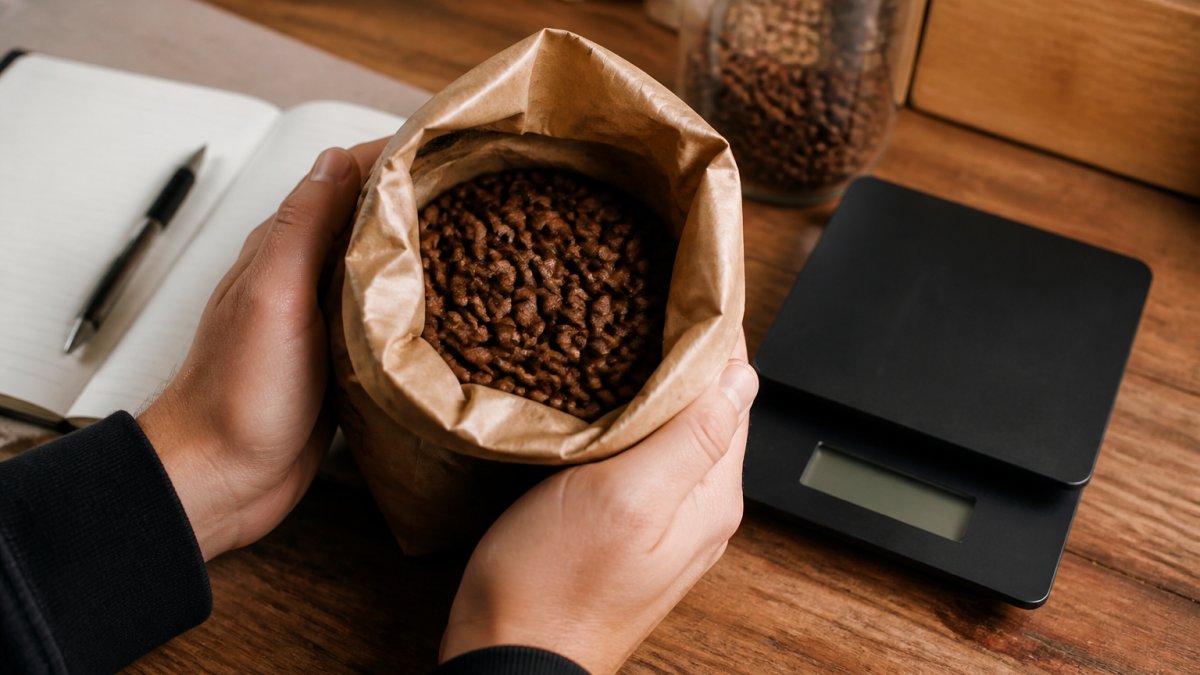
A specialty coffee price breakdown starts at the farm and ends at your door, and each link adds cost that commodity coffee skips. Understanding the split helps you judge whether a bag is priced fairly.
Where the Money Goes Between Farm and Bag
The biggest single cost is green coffee itself. Specialty buyers pay well above the commodity exchange price to secure quality, and that premium is the point, not an accident. Add export logistics, import fees, warehousing, roasting (which loses weight as beans shed moisture), packaging with one-way degassing valves, and shipping, and the margin on a bag is thinner than most people assume.
A common mistake is assuming the roaster pockets the difference. In practice, a large share of a specialty bag's price is the green coffee and the freight to move it.
Why Single-Origin Lots Cost More Than Blends
Single-origin coffee comes from one farm, cooperative, or region, which means smaller lots and less flexibility to swap in cheaper beans when a harvest underperforms. Blends let a roaster smooth over a short crop by substituting components. A single-origin lot has nowhere to hide.
That's why our Ethiopia Natural and Kenya lots carry a premium: they're traceable to specific smallholder groups, and the price reflects that traceability.


Here is where the money goes between the farm and your bag.
| Cost item | What it adds | Note |
|---|---|---|
| Green coffee | Paid well above commodity exchange price | Biggest single cost |
| Export logistics and import fees | Moving beans across borders | Commodity coffee skips this |
| Warehousing | Storage before roasting | Adds cost |
| Roasting | Beans lose weight as they shed moisture | Margin thinner than assumed |
| Packaging | One-way degassing valves | Adds cost |
| Shipping | Getting the bag to your door | Adds cost |
| Single-origin lots | Smaller lots, no swapping in cheaper beans | Premium reflects traceability |
Why Small-Batch Roasting and Freshness Add to the Price
Small-batch roasting costs more per pound because it trades efficiency for control. A roaster running 5-kilogram batches can profile each coffee individually and adjust on the fly; a plant running continuous 100-kilo roasts cannot. Labor, gas, and time per pound all rise.
Freshness compounds the cost. Coffee stales within weeks of roasting, so a roaster selling fresh coffee can't warehouse months of inventory the way a grocery brand can. Shorter shelf life means smaller production runs and more frequent shipping, both of which show up in the price.
Watch out: a "roasted on" date is the single best freshness signal on a bag. If you only see a "best by" date, assume the coffee has been sitting.
If you want to protect the freshness you're paying for, our guide on how to keep coffee beans fresh longer covers storage that actually works.
How to Brew Specialty Coffee at Home Without Wasting It
Brewing specialty coffee at home without wasting it comes down to grind size, ratio, and water temperature. Get those three right and an expensive bag pays for itself in better cups.
The most common waste is grinding too coarse or too fine for the method. A French press needs a coarse grind; a pour-over needs medium; espresso needs fine. Dial that in and you stop pouring money down the drain on bitter or sour cups. Our walkthrough on how to choose coffee grind size for every brew method maps it out per brewer.
Two more habits that stretch a bag:
- Weigh your coffee. A kitchen scale keeps your ratio consistent so you're not guessing.
- Use water just off the boil. Water that's too hot scorches delicate flavors; too cool under-extracts them.
Is Specialty Coffee Worth the Extra Cost?
Yes, for most daily drinkers, specialty coffee is worth the extra cost, but not for everyone. If you drink one or two cups a day and notice flavor differences, the premium buys you a better cup and supports better farming. If coffee is purely caffeine delivery, commodity beans will do the job.
The honest trade-off: you're paying for traceability, freshness, and labor you can taste. What most reviews miss is that the value depends on how you brew it. A great bag brewed badly is worse than a decent bag brewed well.
Where it falls short: specialty coffee demands a little attention. Grind, ratio, and storage all matter more when the beans have distinct flavors to protect. If you want a set-and-forget bag, a darker blended roast is more forgiving.
Pick a Single-Origin Bag and Taste the Difference
The fastest way to understand why specialty coffee costs more is to taste the difference side by side. Start with a single-origin lot and brew it carefully, and the premium stops feeling abstract.
Our Bali Blue is a medium-dark, wet-hulled coffee from smallholder farms in Kintamani with notes of dark chocolate, molasses, and brown sugar, a good entry point if you like a rounder cup. From there, branch into brighter, fruit-forward lots and compare.

Frequently Asked Questions
Why does specialty coffee cost more than regular coffee?
The price reflects how the coffee was grown and handled. Specialty lots are picked by hand, graded above 80 points by licensed Q graders, and processed in small batches. Farmers pay more for selective picking and raised-bed drying, and roasters pay more for traceable lots. Add smaller roast runs and faster shipping to preserve freshness, and the per-bag cost climbs. Regular coffee is picked in bulk, blended for consistency, and sold on volume rather than flavor detail.
Does a higher price always mean better quality coffee?
No. Price signals cost, not a guarantee. A bag can cost more because of rarity, packaging, or marketing without tasting better to you. The reliable marker is the grade: specialty coffee scores 80 or above on the 100-point scale used by licensed Q graders, and the bag should list origin, altitude, variety, and process. Buy from roasters who publish roast dates, then judge by how the cup tastes to you, not by the number on the label.
How much of the price of a bag goes to the farmer?
It varies by origin and contract, and no single percentage applies across the board. What you can check is whether the roaster names the grower, region, and altitude, which signals a traceable relationship rather than a commodity purchase. Goodest lists smallholder sourcing details on every bag, such as the Kintamani growers behind Bali Blue. Direct, named sourcing usually means more of your money reaches the farm than anonymous commodity trading does.
How can I get the most out of specialty coffee at home?
Buy whole beans with a recent roast date, grind right before brewing, and match the grind to your method: coarse for a French press, fine for espresso. Use water just off the boil, around 200 degrees Fahrenheit, and weigh your coffee so each cup is repeatable. A 1:16 coffee-to-water ratio is a solid starting point. Store beans in an airtight container away from light, and finish the bag within a few weeks of opening.
The challenge with specialty coffee isn't paying more; it's paying more and still getting a stale, badly brewed cup. Goodest coffee company exists to close that gap: freshly roasted single-origin beans, grind options matched to your brewer, and a subscription you can pause when life gets busy. Get started with Goodest coffee company and taste what the premium actually buys.
