

How to Keep Coffee Beans Fresh Longer: 2026 Guide
Table of Contents
- Why Coffee Beans Go Stale: Oxygen, Heat, Light, and Moisture
- How Long Do Coffee Beans Stay Fresh?
- How to Keep Coffee Beans Fresh Longer: 7 Steps
- Can You Freeze Coffee Beans? A Step-by-Step Method
- Best Coffee Storage Container: How to Choose
- How to Tell If Coffee Beans Are Stale
- Common Coffee Storage Mistakes to Avoid
- Frequently Asked Questions
Last Updated: October 16, 2026
Why Coffee Beans Go Stale: Oxygen, Heat, Light, and Moisture
Coffee beans start losing flavor the moment they finish roasting. Oxidation is the culprit: oxygen reacts with the bean's oils and breaks down the compounds that create aroma and taste.
Whole beans hold their flavor far better than ground coffee, because grinding exposes far more surface area to air. The biggest factor in freshness is how much air your beans touch, and for how long.
How Long Do Coffee Beans Stay Fresh?
Whole bean coffee stays fresh for about two to four weeks after the roast date when stored in an airtight container away from heat and light. After that it does not become unsafe, just flatter.
Here is a realistic timeline by storage method:
| Storage Method | Peak Flavor Window | Notes |
|---|---|---|
| Original valve bag, pantry | 2-4 weeks | Good if the bag is sealed and stored cool |
| Airtight opaque container, pantry | 3-4 weeks | Best everyday option |
| Refrigerator | A few days | Moisture and odors shorten life |
| Freezer, sealed portions | 1-2 months | Best for long-term storage |
A common mistake is trusting the "best by" date, which is about shelf stability, not peak flavor. The roast date tells you far more.
How to Keep Coffee Beans Fresh Longer: 7 Steps
These seven steps cover the full routine, from opening a bag to brewing, so you keep coffee beans fresh through the whole bag.
Step 1: Keep Beans in Their Original Valve Bag
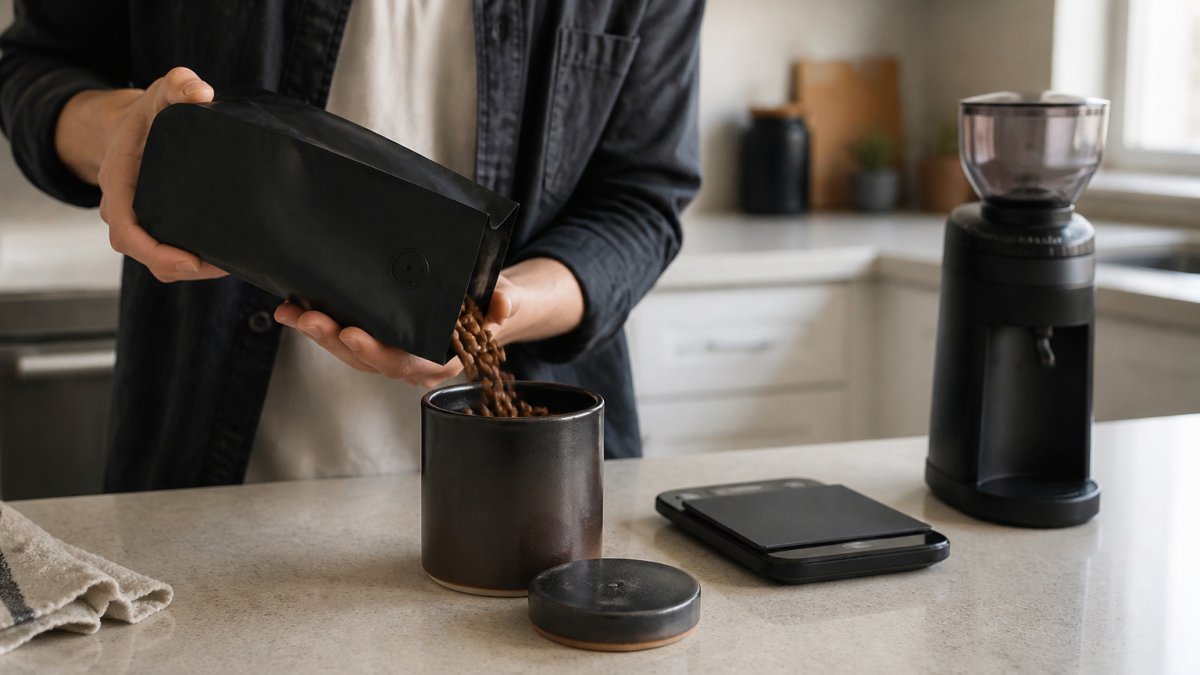
The bag your beans arrive in is better than most people think. Good coffee bags have a one-way degassing valve that lets carbon dioxide escape while keeping oxygen out. If you use the beans within a couple of weeks, the original bag is a fine home, just press out the extra air and reseal it tightly after each use.
Step 2: Transfer to an Airtight, Opaque Container
For longer storage, move the beans into an airtight container that blocks light. An opaque container beats a clear one because light degrades the bean's oils; ceramic and dark glass both work well. The container needs a real seal, if air can get in, flavor can get out.
Step 3: Store in a Cool, Dark Place
Keep your container in a cool, dark spot, like a pantry or cupboard away from the stove. Heat is one of the fastest ways to stale coffee, and every temperature rise breaks the oils down quicker. A shelf next to the oven or above the fridge is a bad home for beans.
Step 4: Grind Just Before Brewing
Grind only what you need, right before you brew. This is the highest-impact habit on the list: ground coffee loses aroma fast because so much surface is exposed to air. A burr grinder gives a more even grind and a more consistent cup. If you buy pre-ground, store it in the smallest container you can and use it quickly.
Step 5: Avoid the Refrigerator for Daily Storage
The refrigerator is the wrong tool for everyday storage. Every time you pull the beans out, moisture condenses on them and speeds up staling, and coffee absorbs the fridge's food odors. For cold storage, use the freezer properly (see the next two steps).
Step 6: Freeze in Small, Sealed Portions
Freezing works well if you do it right. Divide your beans into portions you will use in about a week, seal each one tight, and freeze them. Small portions mean you only thaw what you need, so the rest stays sealed, the best method if you buy in bulk or drink coffee inconsistently.
Step 7: Label and Rotate Your Stock
Write the roast date on every container and use the oldest beans first. This first-in, first-out rule prevents forgotten bags piling up and keeps you drinking the freshest coffee you own.
Can You Freeze Coffee Beans? A Step-by-Step Method
Yes, you can freeze coffee beans, and done correctly it is the best way to keep coffee beans fresh for months instead of weeks. But freezing is unforgiving: trapped air, repeated thawing, or opening a cold bag can leave beans tasting flatter than if you had never frozen them. Here is the method.
Why freezing works (and where it fails)
Cold slows the oxidation reaction that stales coffee: at freezer temperatures the bean's oils break down far more slowly, so flavor compounds stay intact. Freezing fails for two reasons: moisture and temperature swings.
- Moisture: Every time a cold bag meets warm room air, water vapor condenses on the beans, dulling flavor and turning them musty.
- Temperature swings: Each partial thaw and refreeze pushes ice crystals through the bean structure and accelerates staling, which is why portioning matters.
Step-by-step freezer method
- Let the beans degas first. Right after roasting, beans release carbon dioxide. Freezing a bag the day it was roasted traps that gas and can make the seal fail. Wait roughly 3 to 7 days after the roast date before freezing.
- Portion by the week, not the bag. Divide beans into amounts you will finish in about 5 to 7 days. A kitchen scale makes this exact, and small portions mean you thaw only what you will brew.
- Pack airtight with minimal headspace. Use a vacuum sealer, a heavy-duty freezer bag with the air pressed out, or a small airtight container filled close to the top. Headspace is trapped oxygen, the thing you are trying to avoid.
- Label with the roast date and the freeze date. The roast date tells you the bean's age; the freeze date tells you how long it has been cold.
- Freeze away from strong odors. Coffee absorbs smells, so keep portions in the main freezer compartment, not next to onions, fish, or heavily spiced leftovers.
- Thaw sealed, at room temperature, before opening. This is the step most people skip. Let one portion sit sealed for 30 to 60 minutes until it reaches room temperature; opening a frozen bag immediately pulls condensation onto the beans.
- Grind and brew as normal, and do not refreeze. Once thawed, treat a portion like fresh beans and use it within the week. Refreezing is the fastest way to ruin it.
How long frozen beans actually last
Most practitioners find frozen whole beans hold peak flavor for about 1 to 2 months and remain good for several months beyond that, depending on how well they were sealed. Flavor fades gradually, just much more slowly than at room temperature. If you freeze a large haul, work through it within a few months rather than treating the freezer as permanent storage.
Freezing vs. the pantry: when each makes sense
| Situation | Better choice | Why |
|---|---|---|
| You finish a bag in 2-3 weeks | Pantry, airtight container | Freezing adds steps for little gain |
| You buy 2 lb or more at once | Freezer, in weekly portions | Slows staling across the whole supply |
| You brew a few cups a week | Freezer, in small portions | Beans stay fresh between brews |
| You want beans ready to grind now | Pantry, small container | No thaw wait |
The rule of thumb: if you will not finish the beans within about three weeks of the roast date, freeze the portion you will not reach in time. If you will, keep it simple and store it in the pantry.
Best Coffee Storage Container: How to Choose
There is no single best container, only the best one for how you actually drink coffee. The right pick depends on how fast you go through a bag, whether you buy whole bean or pre-ground, and whether you want to see your beans. Here are the four options most people weigh, plus a decision guide.
The four container types, compared
| Container type | Light protection | Oxygen exposure | Convenience | Typical cost |
|---|---|---|---|---|
| Original valve bag | Good (opaque, one-way valve) | Moderate, reseal each use | High, no transfer needed | Included with beans |
| Opaque canister with gasket | Excellent | Low if sealed well | High, scoop and reseal | $15-$40 |
| Vacuum container | Good to excellent | Very low, air is pumped out | Moderate, pump each time | $25-$60 |
| Clear airtight jar | Poor, light passes through | Low if sealed well | High | $8-$20 |
How each type actually performs
Original valve bag. The bag your beans ship in is better than most people assume.
Opaque canister with a gasket. The best everyday option for most households.
Vacuum container. These pump air out after each use, minimizing oxygen exposure more than a standard gasket seal.
Clear airtight jar. Cheap, easy to find, and fine for short-term storage, but only in a dark cupboard.
A decision guide by household
- One or two cups a day, bag finished in two to three weeks: Keep beans in the original valve bag, or move them to a mid-size opaque canister with a gasket.
- Buying in bulk (2 lb or more): Use an opaque canister for the beans you are actively brewing and freeze the rest in weekly portions.
- Brewing occasionally (a few cups a week): Freeze in small portions and keep only a few days' worth in a small counter canister.
What to check before you buy
- Seal: A gasket or tight twist lid, not a loose-fitting top.
- Opacity: If you can see beans through the side, light is reaching them.
- Size: Match the container to how fast you drink coffee. Smaller is usually better.
For most households, a mid-size opaque canister with a silicone gasket covers the everyday case, and the freezer handles anything you will not finish in three weeks. You do not need to spend much, just a real seal, no light, and a size that matches your pace.
How to Tell If Coffee Beans Are Stale
Stale coffee beans show clear signs before you brew:
- Smell: Fresh beans smell sweet and rich. Stale beans smell flat, papery, or like cardboard.
- Look: Fresh beans have a slight sheen from their oils. Very old beans look dry and dull.
- Sound: Fresh beans crack softly when you bite one. Stale beans feel soft and give no snap.
If your coffee tastes flat but the beans are only a couple of weeks old, check your storage first. The problem is usually air, heat, or a loose lid, not the beans.
Common Coffee Storage Mistakes to Avoid
The biggest storage mistakes are easy to fix:
- Storing beans in the fridge for daily use
- Keeping beans in a clear jar on a sunny counter
- Grinding a whole week of coffee at once
Fix these and you will notice the difference in the cup within a week.
That is also where a good subscription helps. At Goodest coffee company, we ship single-origin beans with a clear roast date, so you always know how fresh your coffee is. Our lineup includes options like Bali Blue and Ethiopia Natural, both $24.99, roasted to order and sent straight to your door.


Frequently Asked Questions
How long do coffee beans stay fresh?
Whole roasted coffee beans stay fresh for about 2 to 4 weeks in an airtight, opaque container at room temperature, with peak flavor in the first 7 to 10 days after the roast date. In the freezer, they can keep well for 1 to 2 months. Ground coffee loses its freshness much faster, usually within a few days. Always check the roast date on the bag and buy only what you will use within that window.
Can you freeze coffee beans?
Yes, you can freeze coffee beans to extend their shelf life. Use an airtight, opaque container or a vacuum-sealed bag, and freeze in small portions you will use within a week. When ready to brew, take out only what you need and let the beans come to room temperature before grinding. Avoid thawing and refreezing, as moisture can damage the beans and speed up staleness.
What is the best coffee storage container?
The best coffee storage container is one that is airtight, opaque, and sized to hold only a week or two of beans. Avoid clear containers that let light in.
How can you tell if coffee beans have gone stale?
Stale coffee beans lose their aroma and develop a dull, flat smell. They may look slightly faded and feel less dense. When brewed, the coffee tastes weak, papery, or rancid, with none of the original flavor notes. If you notice these signs, the beans are past their peak. For the best cup, use beans within 2 to 4 weeks of the roast date and store them properly.
Keeping coffee fresh is a small daily habit, not a complicated project. The challenge is consistency: sealing the bag, storing it cool and dark, and grinding right before you brew. Goodest coffee company makes that easier with single-origin beans shipped fresh, a clear roast date on every bag, flexible pause and skip options, and your choice of whole bean or custom grind. Get started with Goodest coffee company and drink fresher coffee from the first cup to the last.