

Choosing the Right Grind Size for Brewing Coffee
Table of Contents
- Why Grind Size Decides How Your Coffee Tastes
- Coffee Grind Size Chart: Particle Ranges and Grinder Settings
-
How to Adjust Coffee Grinder Settings Without Wasting Beans
- Step 1: Find your grinder's zero point
- Step 2: Lock dose and ratio before you touch the grind
- Step 3: Brew one reference cup and read two signals
- Step 4: Move in small, counted steps
- Step 5: Record the setting, not the number
- Burr versus blade: what each can and cannot do
- Why the same setting tastes different tomorrow
- Coffee Grind Size for French Press: Why Coarse Wins
- Cold Brew Grind Size: Coarse, Consistent, and Patient
- Matching Grind Size to Every Brewing Method
- Troubleshooting Grind Size by Taste and Flow
- Conclusion
- Frequently Asked Questions
Last Updated: October 19, 2026
Why Grind Size Decides How Your Coffee Tastes
Grind size is the single variable that controls how fast water moves through coffee, and therefore how much flavor ends up in your cup. At Goodest coffee company, we ship freshly roasted beans, and the most common question we hear is how to grind them for the right result.
The mechanics matter more than most guides admit. Smaller particles expose more surface area to water, so extraction runs faster and pulls out more compounds. Larger particles slow that transfer down.
Here's what most guides get wrong: there is no universal "correct" grind. A setting that produces a great espresso shot will ruin a French press. Grind size only makes sense in relation to your brewing method, your dose, and your contact time.
Coffee Grind Size Chart: Particle Ranges and Grinder Settings
A coffee grind size chart maps particle ranges to brewing methods so you can set your grinder with a starting point instead of guessing.
| Grind | Particle Size (approx.) | Best For | Burr Grinder Setting |
|---|---|---|---|
| Extra coarse | 1.2-1.5 mm | Cold brew | Coarsest 1-2 clicks |
| Coarse | 0.8-1.0 mm | French press, immersion | 3-4 clicks from coarsest |
| Medium-coarse | 0.6-0.8 mm | Chemex, clever dripper | Mid-coarse range |
| Medium | 0.4-0.6 mm | Drip coffee, flat-bed brewers | Middle of the dial |
| Medium-fine | 0.3-0.4 mm | Pour-over cones | 2-3 clicks finer than medium |
| Fine | 0.2-0.3 mm | Espresso | Fine range, dialed per shot |
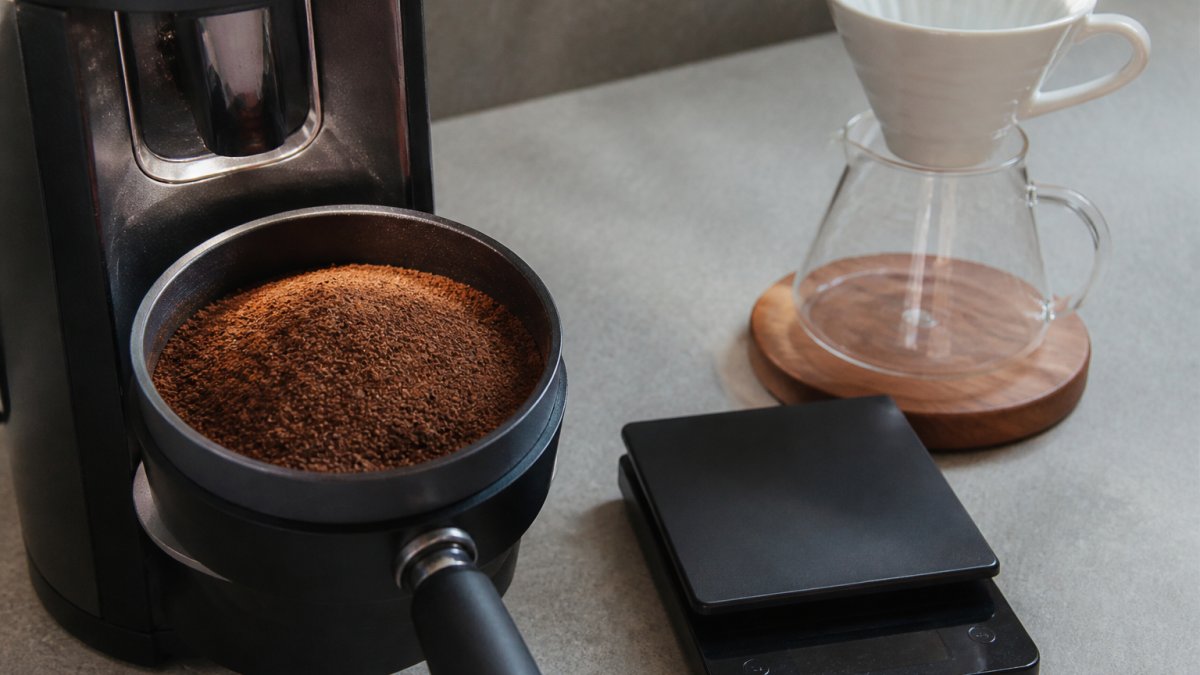
Particle size figures are approximate because grind consistency varies by grinder. A quality burr grinder produces a tighter particle distribution, meaning fewer fines and boulders muddying the brew.

How to Adjust Coffee Grinder Settings Without Wasting Beans
Learning how to adjust coffee grinder settings is a repeatable process, not a matter of trial and error across a whole bag. The problem is that a number on one grinder means nothing on another: a "12" on a stepped conical burr grinder can sit finer than a "4" on a flat-burr model. The fix is to calibrate your grinder to a physical reference, then change one variable at a time and record what worked.
Step 1: Find your grinder's zero point
With the hopper empty and the burrs clean, run the grinder and turn the adjustment toward fine until you hear the burrs just begin to chirp or touch, then back off a quarter turn. That position is your practical zero. Every setting you use afterward is a known distance from it, which is what makes your notes portable across sessions and across bags.
Step 2: Lock dose and ratio before you touch the grind
A common mistake is adjusting grind and dose simultaneously. You'll never know which change fixed the cup. Fix your dose in grams and your coffee-to-water ratio first, and keep them fixed for the whole session. If you change dose, you change bed depth and contact time, which mimics a grind change and confuses the signal.
Step 3: Brew one reference cup and read two signals
Brew at the chart's starting setting and evaluate two things: taste and flow. Taste tells you direction, sour and thin means under-extracted, so go finer; bitter and drying means over-extracted, so go coarser. Flow tells you magnitude, a pour-over that drains far faster or slower than your target brew time is telling you how far to move. Use both before you adjust.
Step 4: Move in small, counted steps
On a stepped grinder, move one or two clicks at a time and re-brew. On a stepless grinder, mark the collar with a pencil or a piece of tape so you can return to a position exactly. Change only the grind, re-brew, and compare against the reference cup. One variable per brew is the whole discipline.
Step 5: Record the setting, not the number
Write down the grinder zero offset, the click count from zero, the dose, the ratio, and the brew time. "Two clicks coarser than zero, 18 g dose, 1:16 ratio, 3:15 drawdown" is repeatable. "Setting 14" is not, because it depends on where your zero actually sits.
Burr versus blade: what each can and cannot do
A burr grinder crushes beans between two surfaces and produces a tighter particle distribution, meaning fewer fines and boulders muddying the brew. That tight distribution is what makes small, counted adjustments meaningful. A blade grinder chops unevenly, so the same "setting" produces a wide spread and unpredictable extraction, you cannot dial it in precisely because there is no setting to count.
Why the same setting tastes different tomorrow
Grind is not the only variable in the cup. Very fresh beans release carbon dioxide that disrupts water flow, so a brew that stalls today may flow normally in a week. Darker roasts are more soluble and often want a slightly coarser grind than a light roast at the same brew method. Water with high mineral content buffers extraction and can make a fine grind taste less harsh than it would with soft water.
Coffee Grind Size for French Press: Why Coarse Wins
Coffee grind size for French press should be coarse, roughly 0.8-1.0 mm, because the method is full immersion with a long contact time.
Coarse grounds also keep your cup cleaner. Fine particles slip through the mesh filter and leave sludge at the bottom of the press.
We recommend a medium-coarse to coarse setting and a four-minute steep. If the result tastes weak and sour, go slightly finer before you add more coffee.
Cold Brew Grind Size: Coarse, Consistent, and Patient
Cold brew grind size should be extra coarse, around 1.2-1.5 mm, because cold water extracts slowly over many hours. A fine grind in a long steep turns muddy and bitter, and it clogs filters.
Our Cold Brew Coffee is a dark French roast with very coarse grounds, blended specifically for cold brew and made from 100% coffee with nothing artificial.
Matching Grind Size to Every Brewing Method
Matching grind size to brewing method comes down to contact time and filtration. The shorter and faster the brew, the finer the grind needs to be. The longer the water sits with the coffee, the coarser it should be.
- Espresso: fine grind, roughly 0.2-0.3 mm, because a shot runs in about 25-30 seconds under pressure. Espresso is the least forgiving method: a one-click change can swing the shot from gushing to choking, which is why you dial it per bag rather than per method.
- Pour-over and Chemex: medium-fine to medium-coarse, so water flows through the cone in a controlled drawdown rather than stalling. A cone that drains in under two minutes is usually too coarse; one that stalls past four minutes is usually too fine or has too many fines.
- Drip coffee: medium grind, matching the flat-bed filter's flow rate. Automatic brewers vary widely in basket shape and spray pattern, so treat the middle of the dial as a start and adjust to the machine's actual brew time.
The pattern is consistent: fine for pressure and speed, coarse for time and immersion. Once you internalize that, most grind decisions become obvious, but only if you also account for the four variables that shift the ideal grind within any method.
The four variables that move the ideal grind
Brew time and bed depth. A longer contact time or a deeper coffee bed slows water and increases extraction, so it wants a coarser grind.
Bean freshness. Very fresh beans release carbon dioxide that disrupts water flow and can make a brew stall or taste sharp.
Water and recipe. High-mineral water buffers extraction and can make a fine grind taste less harsh; soft water can make the same grind taste thin.
Troubleshooting Grind Size by Taste and Flow
Troubleshooting grind size starts with two signals: how the brew tastes and how the water flowed. Sourness and fast flow point to under-extraction, so grind finer.
| Symptom | Likely Cause | Fix |
|---|---|---|
| Sour, thin, watery | Under-extraction | Grind finer |
| Bitter, dry, chalky | Over-extraction | Grind coarser |
| Pour-over stalls, slow drawdown | Too many fines, grind too fine | Coarser setting, check grinder |
| French press muddy, silty | Grind too fine for mesh filter | Coarser grind |
| Espresso shot runs too fast | Grind too coarse | Finer, small steps |
| Espresso shot chokes | Grind too fine | Coarser, small steps |
One caveat: grind isn't always the culprit. Water quality, roast level, and bean freshness all interact with it. Very fresh beans release gas that disrupts water flow, so a brew that stalls today may flow normally in a week.
Conclusion
Grind size is the lever that ties your beans, your brewer, and your palate together, and it rewards a systematic approach over guesswork. The challenge is that great grinding only pays off with fresh beans worth the effort.
That's where we come in. Choose from our Cold Brew Coffee, our 6 Bean Blend for espresso, or our African Espresso, and pause or adjust shipments whenever your usage changes.

Frequently Asked Questions
What grind size should I use for each brewing method?
Match grind to contact time. French press and cold brew take coarse grinds, similar to sea salt. Drip machines sit at medium, like table salt. Pour-over and Chemex land medium-fine, closer to fine sand. Espresso needs a fine grind that feels like flour when pinched. If a brew runs too fast and tastes sour, go finer. If it stalls and tastes bitter, go coarser. Adjust in small steps and keep your dose and coffee-to-water ratio fixed so you change only one variable.
How do I adjust grind size if my coffee tastes bitter or sour?
Sourness usually signals under-extraction, so grind finer to increase surface area and slow the water flow. Bitterness points to over-extraction, so grind coarser. Change one notch on your grinder at a time and brew again before judging. Keep your dose, water temperature, and brew time consistent so you know the grind caused the shift. If bitterness persists after going coarser, check water temperature and brew ratio before blaming the grind.
Can I use a blender to grind coffee?
A blender will crush beans, but it produces an uneven particle distribution with lots of fines and boulders. That unevenness makes extraction unpredictable: fines over-extract into bitterness while boulders stay sour. Blade grinders have the same problem. For any brew method where consistency matters, a burr grinder gives you repeatable settings and a narrower particle spread. If a blender is all you have, pulse in short bursts and use it for immersion brewing like French press, where uneven grounds are more forgiving.
What is the best coarse grind for cold brew?
Cold brew wants a coarse grind, roughly the texture of raw sugar or coarse sea salt, so a long steep does not pull out harsh bitterness. Goodest Cold Brew Coffee arrives already ground very coarse and blended for cold brew, which removes the guesswork. If you grind your own, aim for a setting that looks like small pebbles rather than powder. Steep 12 to 18 hours, then filter. If the concentrate tastes weak, grind slightly finer next time; if it tastes bitter, go coarser.
How do I find the correct coffee grind size?
Start with the chart for your brewer, then dial in by taste. Brew a cup with a fixed dose, ratio, and time. Taste it: sour means grind finer, bitter means grind coarser. Change one grinder notch, brew again, and note the result. Repeat until the cup tastes balanced. A repeatable workflow beats guessing, and writing down your settings for each coffee makes the next bag faster to dial in.
What grind size is best for espresso?
Espresso needs a fine grind, finer than table salt and close to flour, so the pump can build pressure through the puck. The target is a shot that runs in about 25 to 30 seconds for a 1:2 brew ratio. If the shot gushes out in 15 seconds, grind finer. If it drips and stalls past 35 seconds, grind coarser. Espresso is the least forgiving method, so small grinder adjustments matter more here than anywhere else.